What Does a Decibel ‘Sound’ Like?

The term decibel or ‘dB’ is often used in the development and construction industries but very few people know what, for example, a 1dB noise reduction sounds like, or whether it is worth achieving. This can lead to unnecessary argument over what can be negligible improvements.

This short film shows the effect of different reductions in noise levels (in this case 1dB, 3dB, 5dB and 10dB) comparing the starting ‘reference’ noise level with a given noise reduction. It replays the same short film clip over and over so a direct comparison between the different levels is possible.

Food for thought perhaps when someone insists that you achieve that last 1dB of a contractual requirement!

Noise from Gyms in Mixed-use Developments – Five Key Design Considerations

Cass Allen has worked on the acoustic design of many large-scale mixed-use developments containing gyms. The gyms have ranged from small single-room gyms for residents only through to larger independent commercial gyms (Fitness First etc). Here are five key acoustic considerations when designing gyms in mixed-use developments:

1. The location of the gym in the development

Gyms can generate high levels of airborne and impact noise and so they should ideally be located away from residential units. However, this is not often possible and gyms are increasingly being located in mixed-use developments adjacent to habitable areas. In these cases high acoustic performance separating wall and floor constructions will normally be required to ensure that neighbouring residents are adequately protected.

2. The type and size of gym

Some gyms will generate more noise than others. This depends on the size of the gym but also the type of activities and equipment used in the gym. The following activities/areas generally dictate the type and levels of noise generated:

  • Group fitness classes – high music noise levels and potentially high levels of impact noise from people exercising in unison, etc.
  • Free-weights areas – high impulsive noise from free-weights impacting on the floor.
  • Machine-weights areas – can generate high noise levels from weights impacting on each other and the machine body.
  • Cardio-machine areas – bikes, rowing machines etc. These machines tend to be quiet compared with other noise sources.

In medium to large gyms, music tends to be played at high noise levels and often dictates the overall average noise levels with impacts from free-weights dictating maximum impact noise levels.

Cass Allen has carried out a number of noise surveys in gyms of different sizes and types in order to quantify noise levels from different activities and equipment.

3. Appropriate acoustic design targets

To minimise the risk of complaints regarding gym noise, we recommend that new mixed-use developments are designed so that noise from the gym is generally inaudible in adjoining dwellings. This will require a much higher level of sound insulation than the minimum requirements in Part E of the Building Regulations.

Inaudibility is difficult to quantify as it is dependent on the background noise levels at the receptor position, which cannot be accurately predicted if the development is not yet built. In these cases it is necessary to adopt nominal design targets. The following internal noise targets are normally recommended:

  • Design targets for maximum gym noise levels in habitable rooms of adjoining residential properties:
    • Daytime (0700-2300hrs) – 20 dB LAmax
    • Night-time (2300-0700hrs) – 10 dB LAmax

If the development site is particularly quiet it may be necessary to reduce these noise targets.

4. Control of impact sound transmission

Free-weights areas and gym classes can generate high levels of impact noise, which, if unmitigated, is likely to travel effectively through the building structure and disturb adjoining residents. Impact noise from gyms is difficult to quantify and predict and therefore a ‘best practice’ approach is generally proposed whereby the following anti-vibration treatments are included within the gym design:

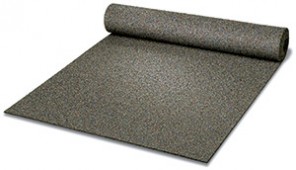
  • Cardio machines, weights machines – Machines placed on resilient floor matting
  • Free-weights areas – Resilient floor systems (sprung floor or bespoke resilient floor build-up incorporating mass layer)
  • Group gym class areas – Specialist sprung floor systems

Even with the treatments listed above, it may be necessary to impose management restrictions regarding, for example, the hours that the gym can be used, and it is still recommended that gyms are not located directly above residential units wherever possible.

5. Reverberation control

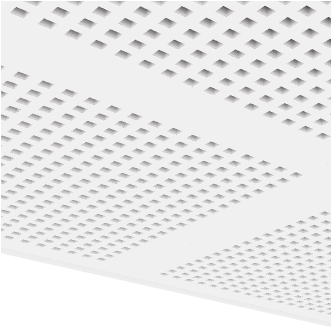
Reverberation treatments should also be considered for medium and large-scale gyms to provide good quality acoustic environments within the gyms themselves. This is particularly important for group class areas where speech intelligibility between the teacher and class members is important. Generally, good internal noise environments can be achieved using acoustic absorptive ceiling or hanging absorbers.

If you would like further information on the acoustic design of gyms in mixed-use developments please call us on 01234 834 862.

We are experienced in the planning, design and testing of large developments for major developers (e.g. Barratt Homes, Berkeley Group, Bouygues, Bellway Homes, Morgan Sindall, Hill Partnerships, Midgard, Kier Group, Mulalley, Mace Group, Taylor Wimpey, Telford Homes, United Living (South) Ltd).

10 Common Value Engineering Opportunities in New Residential Developments

As part of the acoustic design reviews we carry out we always look for value engineering opportunities. We can often save our clients a significant amount of money by ensuring that materials are only specified where required.

Please see below 10 common value engineering opportunities in the design of new residential developments:

1) Acoustic resilient layers in addition to EPS insulation in concrete floors:

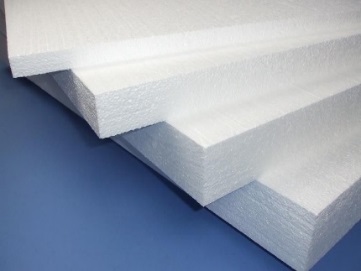
Where floors are constructed from precast or in situ concrete slabs, an EPS thermal layer under a floating screed will normally provide the required impact sound insulation. A dedicated acoustic resilient layer is therefore not normally required. 1

2) Extra acoustic insulation in walls or floors:

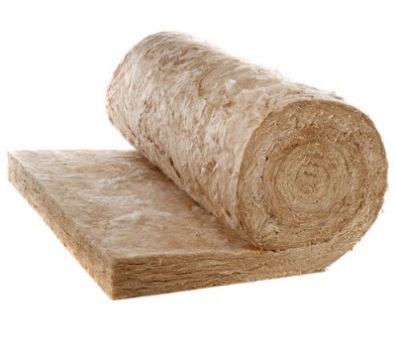
As a general rule, it is not worth adding more than 25mm of mineral wool into a wall or floor cavity that is smaller than 100mm and more than 50mm of mineral wool in a cavity that is more than 100mm. The additional benefit of thicker insulation is marginal and therefore generally not cost affective. 2

3) Acoustic insulation in internal walls:

Insulation is not necessary within internal walls within dwellings provided that you have room to use a 70mm stud. The following wall construction is compliant with Building Regulations Part E requirements and is often much easier/quicker/cheaper to install onsite that a thinner wall containing acoustic insulation:

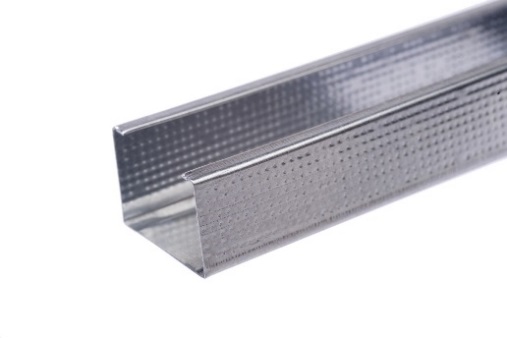
  • 12.5mm high density plasterboard (min. surface mass 10.6kg/m2) either side of a 70mm metal C-stud.
3

4) Reverberation control in common areas:

Building Regulations Part E requires that reverberation control is provided in communal areas (corridors etc). However, reverberation control is only strictly required in communal areas that provide <strongdirect access to dwellings. Communal areas that do not contain apartment front doors do not need to be treated. This generally means that reverberation control is not required in entrance lobbies or stairwells.</strong 4

5) Attenuators in MVHR systems:

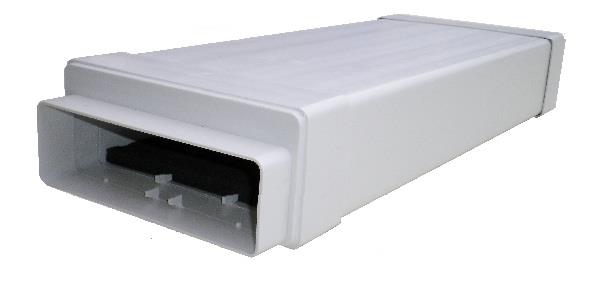
Attenuators are often over-specified in MVHR or MEV systems. As a general rule it is not necessary to include attenuators in ducting between MEV/MVHR units and external supply inlets and discharge outlets. If attenuators are required between the MEV/MVHR units and habitable rooms it may be more cost effective to upgrade the MEV/MVHR units to quieter models (see below) rather than use the attenuators. Some attenuators also only offer poor sound attenuation and therefore are not cost effective. 5

6) Acoustic resilient layers in hotels or student accommodation:

Carpet can be used to control impact sound within hotels or student accommodation because the building operators will have control of floor finishes. Therefore, a dedicated acoustic resilient layer may not be required. 6

7) ‘Acoustic’ products:

We sometimes come across ‘acoustic’ products that claim to have special ‘acoustic’ properties. Often the benefit of these materials is marginal at best. Sometimes the claims are simply wrong. If in doubt contact Cass Allen for an impartial view. image001

So what do you do with all those cost savings? Well, there are some areas where we generally recommend spending that little bit extra. The following items are normally recommended to improve the development and may save money in the long-term by preventing noise-related complaints from future occupants:

8) Independent wall liners to lift shafts, stairwells and bin stores:

Lifts tend to be well isolated these days however complaints regarding structure-borne lift noise do sometimes occur. We therefore generally recommend installing independent wall liners to any walls separating habitable rooms from lift shafts. Independent wall liners minimise the likelihood of complaints and subsequent expensive investigations and remedial works. We also recommend independent wall liners to bin stores and stairwells where regular impacts on the separating walls may also occur. 8

9) Over-sized MVHR units:

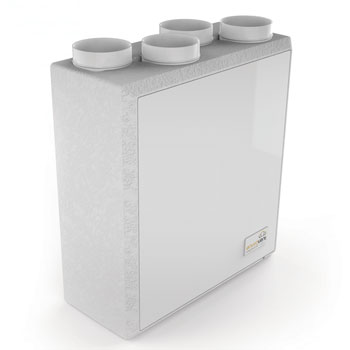
Noise levels generated by MVHR units can vary considerably when moving the same quantity of air. A smaller MVHR unit will have to spin faster and work harder than a larger unit and this leads to more turbulence and higher levels of noise. A doubling of fan speed results in a ~16 dBA increase in noise. It is therefore often worth spending a bit of extra money on larger MVHR units that can comfortably achieve required airflow rates. This is particularly cost effective if it means that attenuators or acoustic duct lagging are not required or if it prevent future complaints from residents. 9

10) Anti-vibration mounts for pipework in plant rooms:

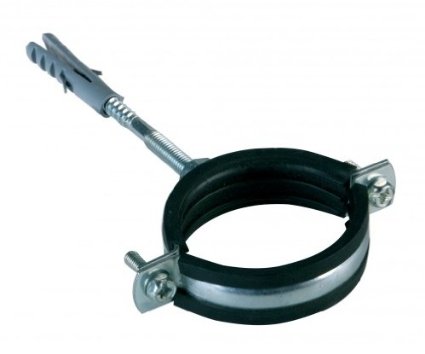
Pipework in plant rooms is often hung directly from the slab above. Structure-borne noise from the pipework can be audible in the rooms above and consequently provoke complaints from affected residents. Where residents are located above plant rooms, we recommend installing the pipework on anti-vibration mounts/hangers to minimise the likelihood of complaints and/or subsequent expensive investigations and remedial works. 10

We hope you find the above examples useful. Please get in touch if you would like to discuss any of the above examples or if you would like us to review any of your projects in more detail.

Singing Buildings: Tonal Wind Induced Noise Caused by Façade Elements

Whenever a new development is built, it impacts the way in which wind moves through an area. This is not a consideration that you may immediately associate with acousticians, however, in tall buildings with certain types of façade elements, it can be a real acoustic problem.

Wind flow across any building will generate noise – this is due to turbulent airflow around the edges of the building. At higher wind speeds this is generally audible as a broadband or slightly tonal ‘wooshing’ sound. People are generally familiar and accustomed to this noise and therefore it is rarely considered to be a problem.

However, under certain conditions, wind can cause building elements to vibrate which can potentially generate high noise levels.

It is quite rare for this to be a problem, however, when it is, it can be quite dramatic.

The weird ‘alien like’ sound that can be heard in the video is caused by the vibration of the ‘blades’ on the roof of the building. This vibration occurs at certain wind speeds and directions.

The phenomenon that causes the blades to vibrate is known as ‘vortex shedding’. Vortex shedding occurs when a fluid (e.g. air) passes over an object. Alternating low and high pressure vortices are created downstream of the object, which result in alternating lateral forces on the object. These alternating lateral forces cause the object to vibrate.

The speed of the air flow and the size and shape of the object will dictate the frequency of the vibration. If the frequency of the vibration is the same as the natural resonant frequency of the façade element, or if the wavelength of the vortex shedding frequency is equal to the spacing of repeating façade elements (e.g. solar shades), then extremely large resonances can occur. These large resonances are what generate the high noise levels.

Smaller façade elements tend to be most susceptible to tonal wind induced noise, such as architectural baguettes, solar shades, cables, small apertures etc. This is because the natural resonant frequency of these objects are more likely to be in the audible frequency range (20-20,000Hz).

There are general guidelines that can be followed to minimise the risk of vortex shedding problems in the design of new buildings:

  • Any circular façade elements with a diameter of less than 50mm should be avoided where possible.
  • Where small façade elements are required, ensure the façade elements are sufficiently damped and consider modifying the design of the façade elements to break up vortices (this can be achieved by adding fins or other design features designed to break up vortices).
  • If repeated façade elements form part of the development design, they should be spaced irregularly to avoid periodic vortices becoming established.

Testing and modelling can also be carried out to further assess whether any issues are likely to occur including:

a) Modelling the façade elements using Computational Fluid Dynamic (CFD) software or;

b) Conducting tests of the façade elements in a wind tunnel.

If you would like guidance relating to tonal wind induced noise or any other acoustic aspect of your project, please contact us and we would be happy to assist.

If you’ve found this article interesting, have a look at these other examples of vortex shedding occurring in various contexts; some of them are quite dramatic!

The fall of the Tacoma Bridge

Cloud formations around madeira

Lamp posts dancing on the M62

Aeolian Harp – an instrument that sings in the wind as a result of vortex shedding