Building Safety Act: Overcoming Gateway 2 and Residential Acoustics Challenges

Since the introduction of the Building Safety Act in 2022, acoustics has emerged as a topic of significant scrutiny and an area where robust understanding of both the regulations and the technical challenges is required to achieve approval. This article sets out a few recurring challenges our clients have encountered and what the solutions were to pass the Gateway 2 process.  

Flexibility and alternative solutions

Gateway 2 requires co-ordination between multiple technical disciplines and design aspirations such that it is not always possible to achieve compliance by familiar, textbook means (e.g. to-the-letter compliance with guidance in the Approved Documents).  We have therefore assisted our clients to achieve approval by developing and defending solutions which comply with the Functional Requirements via novel engineered solutions.

A common example is a shift in our clients’ designs away from including absorptive ceiling systems in corridors to a more practical and cheaper ceiling type. In those cases, we have successfully negotiated compliance with Building Regulations Requirement E3 using various other solutions based on our clients’ requirements and design considerations.

Robust evidence of compliance

A key principle of the Building Safety Act and Gateway 2 process is that compliance cannot simply be claimed – evidence needs to be provided which clearly demonstrates that the building will be compliant with the Building Regulations once constructed. 

As a consultancy which provides both testing and design services, we have a large archive of test results showing Part E compliance for a wide range of building designs. This means that we do not have to entirely rely on manufacturers’ claimed acoustic performance data, Approved Document Guidance or desktop calculations. This can enable significant value-engineering opportunities or assist with achieving compliance for unusual designs where they are required to avoid clashes with other technical disciplines.

Competency and Gateway 2 processes

The BSA requires each consultant and designer to demonstrate that they are suitably competent and qualified to provide their assessments. This means that only companies with enough experience and technical capability are allowed to assist on BSA relevant projects and where competency cannot be sufficiently demonstrated this could lead to significant delays in the approval process.

It is also important to understand that the best practices for processes, documents and procedures required from a design team are regularly evolving and subject to the discretion of the Principal Designer, therefore consultants cannot rely on templated responses and must fully understand the Regulations and technical disciplines being applied.

Cass Allen has supported our clients in over 30 Gateway 2 submissions with many full approvals so far and all Approved Document E queries addressed successfully. We therefore have a robust suite of documents and evidence with a proven track record of approval to demonstrate our competence as required under the Act.

If you would like to discuss how we can support your developments, whether for Part E compliance, Gateway 2 submission or broader acoustic design, please get in touch. We would be very happy to help.

Article by Neil Morgan, Associate Director
BREEAM ‘New Construction’ Version 7

With the introduction of BREEAM ‘New Construction: Residential’ V6.1 in 2024 and ‘New Construction’ V7 in 2025, Cass Allen have assessed the new technical manuals regarding Noise and Air Quality to provide a clear summary of the new credits and how this may affect both developers and designers going forward.

Residential Acoustics

Acoustic criteria for residential development are broken down into three categories: Internal Noise Levels, External Noise Levels and Sound Insulation.

Internal Noise Levels are worth 2 credits when internal ambient noise level requirements are attained.

External Noise Levels are also worth up to 2 credits when the criteria in external functional spaces are achieved.

Sound Insulation for residential is worth up to 9 total credits, with 5 credits available for sound insulation between homes (both walls and floors), and 4 credits available for sound insulation within homes (both walls and floors).

Appointing a Suitable Qualified Acoustician is essential to ensure compliance with these credits.

Non-domestic Acoustics

The acoustic criteria for non-domestic buildings are presented as two distinct requirements.

Acoustic Performance Hea 06 (previously Hea 05) provides 4 available credits for a fully fitted development, and 1 credit for either shell and core, or shell only. The requirements outlined to receive these credits include appointing a Suitable Qualified Acoustician and an assessment of sound insulation, indoor ambient noise levels and reverberation.

Reduction of Noise Pollution (Pol05) provides a single credit where either there are no noise sensitive areas within 800m of the site, or the proposed mechanical plant is designed to meet specific noise limits.

Air Quality

The Air Quality assessment criteria drive the delivery of built assets so they are environmentally responsible in both construction and operation. Within Version 7, the Health and Wellbeing section has been restructured, with Indoor Air Quality Plans now worth 1 credit within Hea 04 and required as a minimum standard for projects targeting Very Good ratings and above.

How Cass Allen Can Help

While the requirements within BREEAM are often clear, attaining the credits often comes with challenges and compromise and typically needs a detailed understanding of the technical input.

Cass Allen has a large team of experienced Acousticians and Air Quality Consultants with in-depth knowledge of both the residential and non-domestic requirements needed to attain the sought after credits.

With many of the requirements in BREEAM being more onerous than typical Building Regulations and British Standard criteria, involving us at an early stage of your development can not only make the process simpler, but can also save time and costs in the long run.

Article by Peter Wheeler, Senior Acoustics Consultant

What’s New in AQ?

The world of Air Quality and Odour is always changing as research advances our understanding of air pollution, odour sources, and the subsequent health and amenity impacts.

Along with this growing body of research and public awareness, comes updated guidance for planning and permitting we must address in order to best advise our clients and ensure the success of their projects. Presented below are a number of new developments that may be applicable to you or your current projects.

Cost Implications

The ‘Air Quality Damage Cost Update 2025’ steers the assessment of air quality impacts and the valuation of external costs, superseding the previous 2023 values. A revised set of ‘damage cost’  values estimated per tonne of air pollutant emission have been calculated to capture the associated societal costs. These can be combined with forecasts of changes in air pollutant emissions to provide an approximate valuation of the external impacts of a development or a policy.

Odour Management

December 2025 saw Defra publish a range of revised tools and guidance for use in Air Quality and Odour Assessments. The Environment Agency’s ‘H4 Odour Management’ guidance was officially withdrawn and replaced with ‘Odour management: comply with your environmental permit’.

This new guidance is more accessible and structured around permit compliance requirements and risk management, emphasising Best Available Techniques (BAT) to prevent or minimise odour along with measures appropriate to the specific site and sector. Most notably, it shifts the focus of assessments away from numerical assessments to public complaints and community impact when determining the severity of odour pollution. It also sets out a practical framework for writing Odour Management Plans and integrates them more closely with permit conditions and compliance expectations, requiring regular reviews and continuous improvement.

BREEAM Version 7

BREEAM New Construction Version 7 has replaced the Version 6 and 2018 schemes and sits alongside BREEAM New Construction Residential Version 6.1, with BRE continuing to refine the assessment criteria to drive the delivery of built assets so they are environmentally responsible in both construction and operation. Within the Version 7 update, the Health and Wellbeing section has been restructured, with Indoor Air Quality Plans now worth one credit within Hea 04 and required as a minimum standard for projects targeting Very Good ratings and above.

Crematoria

The long awaited ‘Crematoria: process guidance note 5/2 (25)’ has been published, replacing the previous version and a number of older supplementary documents. Local Authority regulators must use this note to assess applications and write permits for crematoria. The new guidance outlines specific emission limits and monitoring requirements for pollutants including mercury and NOx, as well as the necessity for fully accredited monitoring. It is anticipated that the data collected through this broader pollutant reporting will inform future emission limit values for pollutants that don’t yet have set standards.

Clean Air Night

Finally, 22nd January 2026 marked Clean Air Night, an annual campaign by Global Action Plan which aims to educate the public on indoor air pollution and discourage domestic solid-fuel burning. On the same day, the government opened a UK-wide public consultation, which sets out proposals to reduce emissions from domestic burning through stricter emission limits for new stoves, mandatory labelling for stoves and fuels and increased enforcement penalties for suppliers who breach fuel standards. These measures aim to cut harmful emissions, support cleaner technologies, and give households better information about the health impacts of burning solid fuels. The consultation remains open until 19th March 2026.

Article by Hazel Swinfen, Senior Air Quality Consultant

Acoustic Implications of Recladding High-Rise Buildings

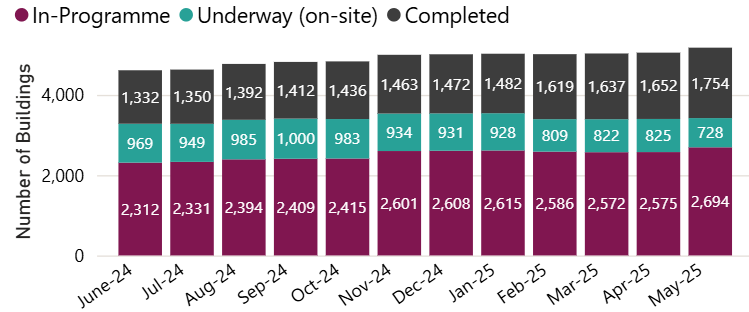
The recladding of high-rise buildings has become a major focus since Grenfell, with thousands of buildings across the UK undergoing works to replace unsafe (i.e. potentially flammable) façade materials. According to government figures (May 2025), over 1,700 buildings have been completed, more than 700 are in progress, and work has yet to start on almost 2,700 more.

The primary driver is of course fire safety. However, poorly considered changes to glazing, ventilation or cladding systems can create acoustic issues with the potential to result in claims and negative PR against developers, contractors and building operators undertaking the work. This scrutiny is likely to increase as Resident Engagement groups are given more power under the current legislation. 

This article outlines the key acoustic risks to assess when recladding, and how we are already helping our Clients achieve compliance and minimise their risk of PR issues and claims related to acoustic performance.

London Environmental Consultancy Projects

External Sound Insulation

High-rise buildings are often located close to major noise sources such as roads, railways, airports and industrial facilities. The design of the external façades — including glazing and ventilation — dictate internal noise levels. If the new systems have a lower acoustic performance than the existing systems, the noise levels in the building will increase as a result.

Planning requirements are often imposed to ensure this is considered, however, given the risk of negative PR and claims, an acoustic assessment of the proposed façade design is strongly recommended in any case.

Overheating and Thermal Comfort

Recladding typically improves a building’s thermal performance, reducing heat loss in winter. However, better insulation also increases the risk of overheating in warmer months, increasing residents’ reliance on open windows for thermal comfort and exposure to high noise levels.

To prevent problems, overheating assessments should be carried out alongside noise assessments, particularly for buildings close to significant noise sources. This ensures that both thermal comfort and acoustic comfort are protected.

Acoustic Separation Between Dwellings

In most cases, the sound insulation between dwellings (across separating walls and floors) is unaffected by recladding. However, buildings with curtain walling can present risks: sound may travel vertically or horizontally through the walling system, undermining acoustic separation between dwellings.

How Cass Allen Can Help

Cass Allen is already supporting clients with the design and specification of recladding systems. We add value by:

  1. Undertaking site noise surveys to quantify risks
  2. Reviewing cladding proposals to identify potential acoustic issues early
  3. Making sure works do not introduce new or worse acoustic problems for residents
  4. Helping achieve compliance with any relevant Building Regulations or planning requirements
  5. Preparing clear acoustic specifications for recladding systems
  6. Undertaking on-site acoustic testing of installed systems to demonstrate performance

Conclusion

Recladding programmes are rightly focused on fire safety. However, relatively inexpensive acoustic design assessments can protect developers, contractors and building managers against damaging PR and claims down the line.

If you are planning or already undertaking recladding works, call us on 01234 834862 or email mail@cassallen.co.uk to discuss your project and how we can help.

Rapid Growth of Padel Courts & Important Noise Considerations

With the rising popularity of padel it is unsurprising that there is an ever-increasing demand for high quality courts on which to play, with many new developments now including them in their design.

Padel courts are beginning to appear in place of existing tennis courts, as well as both internal and external new locations across sports centres, spas, new residential developments, and smaller scale local padel clubs.

Padel, like tennis, revolves around the hitting of a ball over a central net, to be returned by an opposing player or team, but with the added element of squash, this can be done so through the rebounding of the ball on either the back or side walls of the court. With each hit and each rebound of the ball comes with it a very short sharp noise, with many of these noises in short succession making up a rally.

Unfortunately, due to this series of repetitive noises, padel games produce very distinguishable and high levels of noise, which has the potential to cause significant noise impact on surrounding occupants’ amenities if not assessed and mitigated correctly.


With our in house database of measured padel court noise and your proposed court locations we can use a calibrated, tried and tested modelling technique, to accurately predict the expected noise impact at the closest noise sensitive properties. Armed with this information, our team of specialists can provide you with bespoke mitigation design advice to aid in both the planning application, and the successful installation and running of your padel courts.

If you need assistance with this or any other leisure noise impact assessment, then please get in touch at: mail@cassallen.co.uk

Air Quality: The Good News…and the Why It’s Not “Job Done” Yet

In fact, many local authorities — including Cambridge, Bath and parts of London — are even revoking their Air Quality Management Areas (AQMAs) as pollutant levels fall below the statutory limits that underpin national planning policy.

Despite a great deal of scepticism, targeted measures such as the London ULEZ are working – alongside the benefits of cleaner vehicles, and the move away from combustion energy solutions for heating, and better urban design.

Does that mean Air Quality is now ‘sorted’? Not quite, and here is why:

  • Compliance isn’t everything – new WHO targets and local authority policies mean a site might still be deemed unacceptable in health or planning terms.
  • Councils are cautious – even where AQMAs are revoked, planning teams still request Air Quality Assessments, Mitigation Strategies, and Management Plans, in line with Local Plan policy and supplementary planning guidance.
  • We know more about pollutants – even small amounts of brake and tyre wear can harm health and we can advise where this needs to be considered.
  • Indoor air matters – we spend 90–95% of our time indoors, and home pollution is often higher than outdoors. BREEAM v7 now rewards projects for addressing indoor air quality.

At Cass Allen, whilst still helping you to gain planning approval, our focus is shifting to demonstrating that developments actively support health and policy ambitions. This means:

  • Navigating diverse local and regional guidance to meet planning requirements.
  • Designing air quality positive strategies for planning gain.
  • Future-proofing projects against tightening guidance regarding fine particulate matter.
  • Building mitigation packages that satisfy planners before objections arise.

If you’re planning, designing or managing a site in 2025 and beyond, air quality is not just a box to tick — it’s an opportunity to enhance both community wellbeing and your project’s performance, reputation, and long-term value.

If you’d like us to review an upcoming scheme or help shape a mitigation strategy, just reply to this email — we’re always happy to talk through options.

Case Study: Construction Monitoring at Historic London Site

In this article, we set out how our involvement with the redevelopment of a historic site in north London helped manage noise, dust and vibration emissions and keep the project continuing smoothly. Our role has been to manage these impacts effectively and maintain compliance for this landmark scheme which is delivering hundreds of affordable dwellings and a community support centre for vulnerable people.

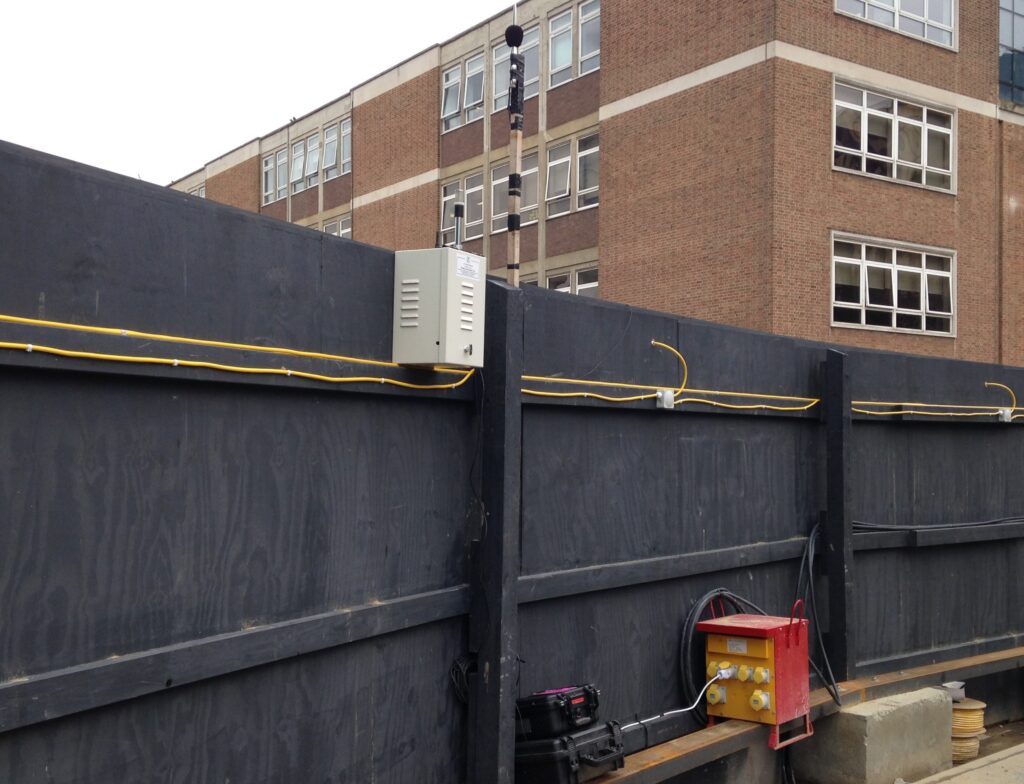
A robust monitoring and management strategy was developed to address the site’s complex urban setting alongside the client and local authority. Deploying real-time dust, noise, and vibration monitoring at four locations — including site boundaries and off-site receptors — to track emissions continuously and provide clear evidence of compliance with the local authority’s planning conditions. Additional attended monitoring was carried out during activities with higher potential for emissions, such as mechanical breaking during demolition.

Since our involvement began in late 2022, continuous monitoring and regular liaison with the Local Authority’s Environmental Health Team have enabled the project to keep progressing in compliance with the planning conditions. The project is due to complete in 2028, with our monitoring strategy being reviewed and updated in line with each phase of work to keep the project on track.

By working closely with the project team and the council’s Environmental Health Team, Cass Allen’s proactive approach secured a Section 61 consent for construction works following demolition — and we continue to renew this on a rolling 6-month basis as the project progresses. Our real-time monitoring, attended checks, and clear fortnightly reports have provided confidence for the council, assurance for residents, and the evidence needed to keep this ambitious project moving forward.

How We Can Help
Cass Allen are trusted specialists in environmental monitoring, offering:

  • Baseline surveys before works commence
  • Installation and management of real-time noise, dust, and vibration monitors
  • Remote data access and alert systems for site teams
  • Regular reporting to clients, contractors, and authorities
  • Support in responding to complaints or regulatory queries

If you’d like to discuss how we can help manage environmental impacts on your current or future projects, please get in touch — we’re here to support you at every stage.

Acoustic Modelling – Hear Your Room Before It’s Built!

The acoustic design of rooms can play a crucial part in determining how effectively spaces can be used.

This is most obvious in spaces such as music venues or theatres, where the acoustics of the space is often a primary design focus. However, good acoustic design is also important for other acoustically sensitive buildings such as educational, commercial and medical facilities.

Designing Better Sounding Spaces

With the latest room acoustic modelling software, Cass Allen can build a room virtually and then simulate how sound behaves inside it. We can try different materials and constructions to see how they affect things like clarity, loudness, and echo. This means we can fix problems before anything is built, saving time and money. You can even hear what a space will sound like before it’s built — a virtual preview of the room’s acoustics.

Reverberation untreated

Treated

From improving speech intelligibility in offices and classrooms to making music sound amazing in a concert venue. The below images show CATT modelling to simulate the reverberation control within a lecture theatre.

If how your development sounds is important to you then get in touch and we would be pleased to help you get it right.

Introducing our Newest Colleague – Binaural Recordings Coming!

We are pleased to introduce the newest addition to the Cass Allen team – the Nuemann KU 100 microphone. It’s an anatomically correct pair of ears on a head with two microphones used for binaural recordings.

Binaural recordings are a method of audio recording designed to capture sound in a way that replicates the human experience of hearing – so that when played back through headphones the listener feels as though they’re immersed in the space where the recording was made and able to locate the position of the sound sources around them.

We will be carrying out some binaural recordings over the next few weeks and months to capture various ‘soundscapes’. We will post some examples on our website and link to them in our next update so you can have a listen. Watch this space!

P.S. we currently looking for the best name for our new recruit – ideas on a postcard/email please with a prize for the best suggestion! mail@cassallen.co.uk

Unlocking The Grey Belt – Case Study: Land at Windy Ridge

Cass Allen recently assisted on a challenging new development in Cornwall where it was necessary to assess the air quality and odour impact of an agricultural use on residences in terms of air quality and odour.

The Challenge
The project came with two major considerations related to a livestock calf rearing building in close proximity to dwellings and ecologically significant areas:

  • Odour risks for residents.
  • Air quality impacts on residents and nearby Sites of Special Scientific Interest (SSSIs).

A robust desktop-based solution was essential to establish the potential impact on air quality and odour from the livestock building.

The Solution
Odour. Using a source–pathway–receptor approach, combined with detailed weather data, we demonstrated that the risk of nuisance odours at the dwellings was negligible.

Air Quality: Initial screening with the SCAIL-Agriculture model flagged potential nutrient nitrogen impacts that could harm protected sites. Working closely with Natural England, we carried out a full dispersion modelling assessment to dig deeper taking into account nearly 300 local planning applications to assess potential cumulative impacts.

After rigorous assessment and open dialogue with Natural England, we provided the robust evidence needed to keep the project on track — balancing air quality and odour considerations arising from the proximity of the agricultural and residential uses.

The Result
The risks were managed and planning permission and funding were secured. This was a great example of how timely environmental assessment keeps construction moving while safeguarding the environment for generations to come.

If you or any of your colleagues require any Air Quality or Odour assistance on your sites, then please contact mail@cassallen.co.uk